

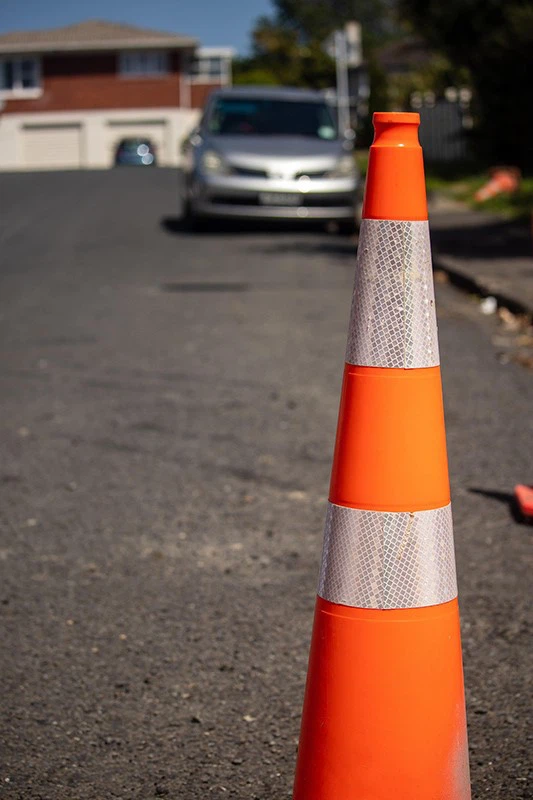
I see it every single day. A homeowner is tired of people speeding past their driveway, so they plonk down a couple of orange cones to slow people down. Or a shop owner tries to save a parking spot on a public street using a beat-up 18-inch cone they probably found in a ditch.
It looks harmless, right? You are just trying to keep things safe. But as someone who deals with traffic safety products daily, I have seen these good intentions turn into massive legal headaches.
The short answer is: No, you cannot just put cones wherever you feel like it. Here is the reality of the cone laws that most people ignore until the fines start rolling in.
The Public Space vs. Private Property Rule
If you are on your own driveway or a private parking lot, go nuts. You can line up a hundred cones if that is what makes you happy. But the moment that orange base touches a public asphalt road, you have entered the territory of the DOT or your local council.
Placing a cone on a public road technically obstructs the highway. Let's look at the actual law. In the United States, under rules like the California Vehicle Code Section 21465, placing unapproved traffic control devices on a public street is an outright violation. In the UK, it falls under Section 137 of the Highways Act 1980. If a cyclist clips your illegal cone and breaks their collarbone, you aren't just looking at a grumpy neighbor. You are looking at a personal injury lawsuit where you have zero legal defense, because you essentially placed an unauthorized hazard in a public right-of-way.
The Problem with Permits
If you are a contractor doing a utility fix, you don't just throw out cones and start digging. You have a formal traffic control plan. Real road work requires gear that meets strict federal or local guidelines, like the MUTCD (Manual on Uniform Traffic Control Devices) in the US.
I remember a guy in an Ohio suburb who bought some cheap, non-reflective cones to protect his kids while they played basketball in a cul-de-sac. A car hit one at night because they couldn't see it, swerved, and scraped a parked truck. The police didn't blame the driver; they cited the homeowner. Why? Because the MUTCD strictly mandates that any cone used at night on a roadway must be retroreflective and a minimum of 28 inches tall. His 12-inch plastic sporting goods cones made him entirely liable for the property damage.
How to Do It the Right Way
If you actually need to redirect traffic for a legitimate reason, like a moving van delivery or a temporary block party, do not just guerrilla-style it.
First, go to your city's public works website and apply for a Right-of-Way Permit or a Temporary Street Closure permit. It usually costs between $25 to $50, depending on the municipality, but it gives you the legal umbrella to use that space.
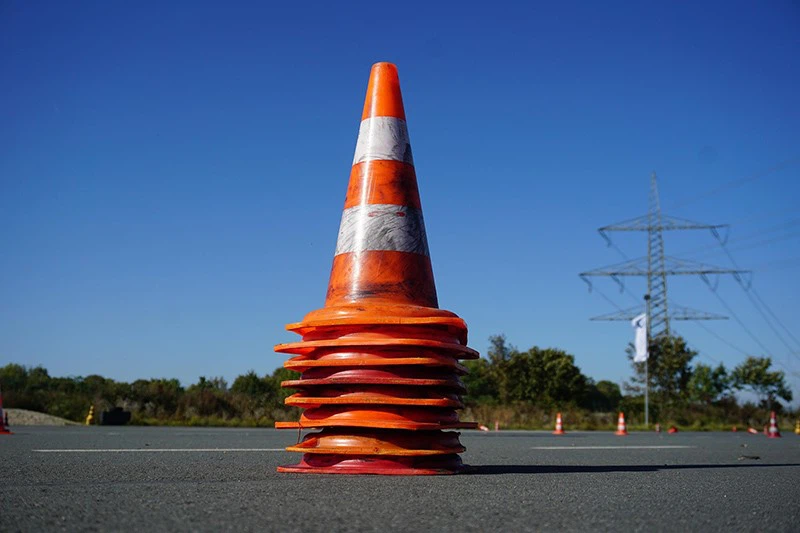
Second, use the right gear. A 12-inch sport cone belongs on a soccer field, not a road. We always tell our clients: if it is going near a car, you need heavy-duty PVC cones with high-intensity reflective collars. Visibility is your absolute best defense against a negligence claim if something goes wrong.
The Parking Spot Myth
Let's settle this once and for all: Putting a cone in a public parking spot to save it is illegal in almost every major municipality. People throw around vague stats, but the reality is written in local ordinances.
Take Chicago's famous winter street dibs system. People put out cones and lawn chairs to save shoveled spots. While culturally tolerated for a few days after a blizzard, the Department of Streets and Sanitation eventually drives down the block and throws those cones straight into the garbage truck. In cities like Boston, Seattle, or London, putting a cone in a public spot violates municipal codes against reserving street parking, and parking enforcement officers will hit you with fines ranging from $50 to $250 per offense. If you really need that spot, call the city and get official No Parking sign bags.
Traffic cones are highly regulated safety tools, not toys. When used as part of a permitted, compliant safety plan, they save lives. When used as a DIY speed bump by an angry neighbor, they are a liability magnet.
Before you put that orange plastic on the street, ask yourself: Do I have the municipal permit for this, and does this cone actually meet federal visibility specs for night use? If the answer is no, you are much better off keeping the cones in the garage.