

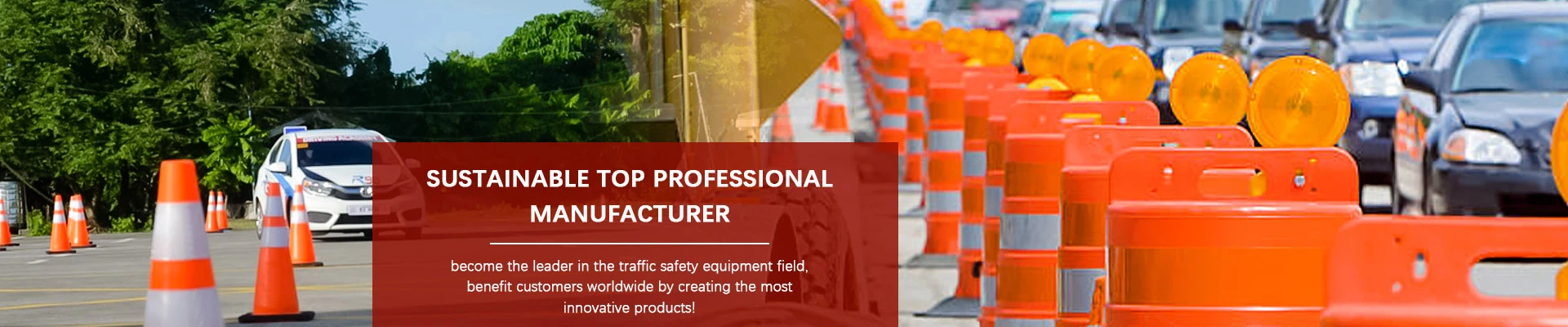

When we see a distracted driver hit an orange traffic cone, which flies into the adjacent lane like a plastic rugby ball, you might wonder if it's destroyed and unusable.
As a factory specialising in traffic cones, I'm frequently asked this question by purchasing staff: "Can these things really withstand impacts? Or am I just wasting my money?"
The answer isn't a simple yes or no. It's about the difference between "surviving" a hit and being "expendable."
Professional-grade cones are injection-moulded into a single, seamless piece using premium Polyvinyl Chloride. This high-end material possesses a cool trick called "shape memory." Essentially, the polymer chains are engineered to "remember" their original form.
To meet MUTCD standards, these cones have to survive a brutal 180° crush test at temperatures as low as -10°C without cracking. In the real world, when a vehicle flattens a quality cone, the air gets squeezed out, and the plastic goes thin, but those high-quality polymers quickly "recollect" themselves and pop right back up. Cheap clones made from recycled plastic? They don't have that molecular memory-they just shatter like a dropped dinner plate.

Why Weight Matters (The Base-Tier Ratio)
If a cone is run over and it slides 50 feet down the road, it's a hazard. If it stays put, it's a tool. This comes down to the cleat design and the base weight.
Most high-performance cones use a black base made from recycled rubber or weighted PVC. Usually, a 28-inch cone weighs about 7 lbs (3.1 kg) or 10 lbs (4.5 kg) for high-speed zones. This weight isn't just for wind; it's to create a pivot point. When hit, the base is designed to stay relatively grounded while the "cleats" (those little feet on the bottom) grip the asphalt, allowing the cone to fold rather than tumble into oncoming traffic.

The 3-Tier "Death" Scale for Cones
Even the best gear has a limit. In our testing at Top Safe Traffic, we look at three levels of "impact survivability":
The Glance: A side-swipe at 40 mph. A premium cone will spin, maybe lose some reflective tape, but stay 100% functional.
The Full Crush: A tire goes directly over the top. A high-quality PVC cone survives this 4 out of 5 times in moderate temperatures.
The High-Speed "Cold Snap": This is the killer. If it's -20°C and a truck hits a cone at 60 mph, the plastic becomes "brittle-glass." No amount of engineering saves a cone in deep-freeze high-speed impacts.
Real-World Case: The Highway 101 Repave
Last year, a contractor we work with was using "budget" cones from a big-box retailer for a night shift repaving job. By 3:00 AM, they had lost 22% of their perimeter line to simple tyre clips. The cones weren't popping back up; they were snapping at the base, leaving jagged orange plastic all over the new asphalt.
They switched to our Top Safe heavy-duty interlocked cones. Same crew, same traffic volume. The failure rate dropped to under 3%. Why? Because our PVC has a higher concentration of UV stabilisers and plasticisers. They don't just look orange; they behave like rubber.
Are they designed to be run over? Yes. Are they indestructible? No. If you're buying for a parking lot, you can opt for lighter, cheaper models. But if you manage a road construction crew, flattened cones mean there will be vehicles in your work area, so you need high-strength cones with interlocking bases.
At topsafetraffic.com, we don't sell "disposable" plastic products. We sell safety for your construction site. If your cones look like they've been through a war zone after just one week of use, it's time to contact us.