

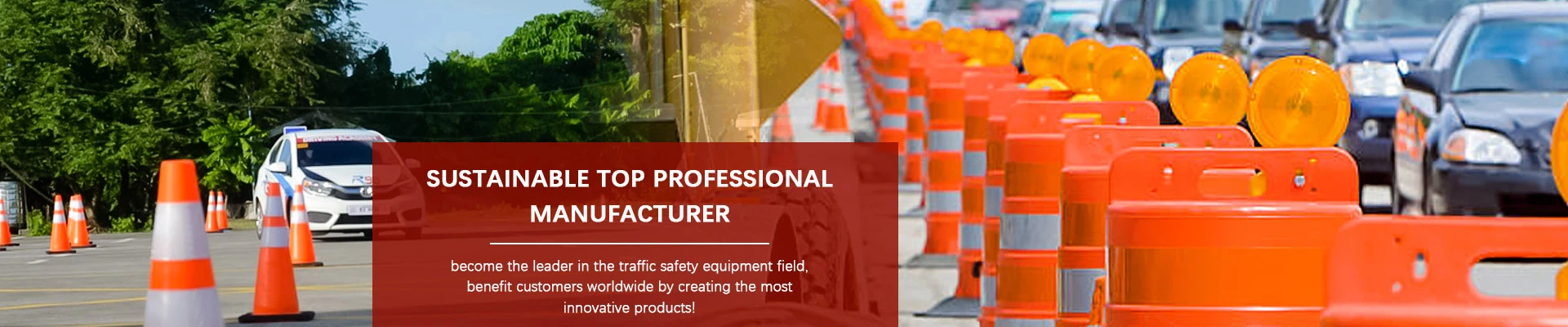


A state DOT inspector can shut your lane down before lunch if your cones are the wrong height. One county crew in Texas learned this the hard way: they set out 18-inch cones on a 45 mph county road at dusk, and the citation named non-compliant channelizing devices - the federal term for anything that steers cars, cones included - under the MUTCD. The real setback was the rework: pull every cone, order 28s, rebuild the setup. That ate the whole week.
The short version: 18 vs 28 vs 36-inch traffic cones comes down to one question - how fast is the traffic, and will anyone see the cone after dark? Pick 18" for parking lots and slow campuses, 28" for standard road work and anything near moving traffic, and 36" for freeways and windy open ground. Below you get a 30-second matrix, the actual MUTCD height rules, and a buyer's checklist so you neither over- nor under-buy.

You already know a traffic cone isn't just orange plastic. Most buyers we talk to have been burned once - a shipment too short for the job, or the wrong height for the site. This guide walks you through the three heights Topsafe actually manufactures, the federal compliance line, and the trade-offs real procurement teams weigh. We'll cover specs, reflective bands, materials, and the mistakes that trigger those roadside citations.
Key Takeaways
- MUTCD Part 6 §6F.59 sets the floor: 18" (450 mm) for daytime low-speed work, 28" (700 mm) for nighttime or highway use.
- 28" is the sweet spot for most municipal and contractor jobs - it's the legal minimum once night or speed enters the picture.
- 36" is an upgrade for freeways (>45 mph), windy plains, and state DOTs that mandate taller channelizing devices.
- Reflective collars matter as much as height: 28" usually runs two 4" bands; 36" runs two or three 6" bands.
- Topsafe ships all three heights (S-1237 / S-1232 / S-1233) as PVC injection cones, with OEM/ODM and FCL/LCL options.
Quick Answer: What Size Traffic Cone Do I Need?
Straight up: "what size traffic cone do I need" has no single right answer, because the federal minimum changes the moment headlights come on. A cone that is perfectly legal at a daytime parking lot can draw a citation on the same lot at 9 p.m. Start with two variables - traffic speed and night use - and the right height stops being a guess.
The 30-Second Selection Matrix. If you read nothing else, read this table. Match your site to a row and you have your answer.
|
Your site |
Traffic speed |
Night use? |
Buy |
Reason |
|
Parking lot, campus, event floor |
Under 15 mph |
Day only |
18" |
Lightweight, day-compliant, stacks easily |
|
City street, road work, lane shift |
15–45 mph |
Often yes |
28" |
MUTCD night/highway floor is 28" |
|
Freeway, highway, open windy plain |
Over 45 mph |
Yes |
36" |
Extra height + ballast for speed and wind |
Here's the catch most catalogs skip: the right size flips the moment night work starts - a cone that is perfectly legal at a daytime parking lot can be a citation on the same lot at 9 p.m. Keep that day/night switch in mind as we go through each height.
18-Inch Cones: The Lot and Campus Workhorse
Light. Compact. Easy to toss in a trunk. The 18" cone (Topsafe model S-1237, 45 cm tall) is the quiet default for anywhere cars move slowly and the sun is up.
Specs at a glance
- Height: 45 cm (18")
- Weight: roughly 2–4 lb
- Reflective band: one low collar, optional
Where it earns its keep
- Parking lots and garages
- School campuses and hospital loops
- Temporary directional guidance at events
- Any low-speed zone where nobody exceeds 25 mph
Per MUTCD Part 6, 18" is the legal daytime minimum for low-speed work areas. It is not legal for night use on a road where faster traffic runs, and it is never the right call on a highway. One buyer learned the hard way when a 45 mph county road got 18" cones at dusk - the citation named exactly that gap.
The 18" also works as a lightweight delineator - a marker showing drivers the edge or line of a lane - for short-term layouts you set and reset a dozen times a day. The light base is the point: that's the mass packed into the bottom section, and a crew can carry twenty in one trip.
One warning, straight up: Don't let the smaller profile tempt you into 18s for a road job. The compliance gap is what gets you - a non-compliant setup means pulling and replacing every cone.
Shopping for slow-speed sites? See the full 18" cone product.
28-Inch Cones: The Sweet Spot Most Buyers Actually Need
This is the size we ship most. The 28" cone (Topsafe S-1232, 70 cm) sits at the legal floor for night and highway work, which makes it the safe default for municipal crews and road contractors who can't predict whether a job will run past sundown.
Specs at a glance
- Height: 70 cm (28")
- Weight: 5–10 lb (rubber-base types run 7–10 lb; Topsafe's PVC-flexible 28" comes in around 2.3 kg, about 5 lb, on the lighter end)
- Reflective bands: two 4" collars is the common spec
Why 28" wins the popularity contest
It is the only height that satisfies MUTCD for both day and night on standard roads. Put simply: if you buy one size for a mixed fleet of city and suburban jobs, this is it. A weighted rubber base does the stabilizing - ballast that keeps the cone upright against wind and impact without making it a chore to carry.
The 28" also pairs well with solar barricade lights for nighttime delineation, and with rubber vs concrete wheel stops if your project spans lot and roadway. For buyers asking "which traffic cone size should I buy" with a mixed portfolio, 28" is the hedge that rarely comes back as a mistake.
Don't over-size, though: A parking operator once spec'd 28s for an indoor garage where 18s would do - compliant, yes, but the height bought nothing the slower cone couldn't deliver. Match the cone to the speed, not a fear of under-specifying.
Need the workhorse? View the 28" PVC cone (S-1232) with optional reflective collars and OEM branding.
36-Inch Cones: The Freeway-Grade Upgrade
Serious height for serious roads. The 36" cone (Topsafe S-1233, 90 cm) is built for freeways, expressways, and the flat, windy plains where a shorter cone gets knocked flat by crosswinds or truck wake.
Specs at a glance
- Height: 90 cm (36")
- Weight: 10–16 lb
- Reflective bands: two or three 6" collars
When 36" is not optional
The strict MUTCD rule is "28" minimum for night or highway." So why 36"? State DOTs frequently mandate the taller device on high-speed routes, and the extra height simply reads better at 70 mph. A larger ballast fights wind, and more collar area - the reflective band wrapped around the cone - means more shine thrown back at headlights. FHWA keeps a state MUTCD directory showing where each state adds its own taller-cone rules, so check the one over your job before you spec.

Real talk: on lanes over 45 mph or gusty open ground, 36s outlast 28s through the shift. Many crews treat 36" as the compliance insurance alongside water-filled barriers and long-term lane closures. If the job is a fast road, wind stability is usually the tiebreaker between the two taller sizes.
18 vs 28 vs 36 Inch Traffic Cones: Side-by-Side
Here is the full comparison for the snippet hunters. Six dimensions, one table.
|
Dimension |
18" |
28" |
36" |
|
Real height |
45 cm |
70 cm |
90 cm |
|
Weight |
2–4 lb |
5–10 lb |
10–16 lb |
|
MUTCD status |
Day, low-speed only |
Night & highway floor |
Freeway upgrade, state-mandated often |
|
Wind stability |
Low (light base) |
Medium (weighted base) |
High (heavy ballast) |
|
Portability |
Excellent (stacks) |
Good |
Fair (heavy) |
28 vs 36 Inch Traffic Cone: Which Taller Size Wins?
If you came here for "28 vs 36 inch traffic cone," the row that decides it is wind stability plus state requirement. Both clear MUTCD for highway night work; the 36" just survives the weather and the stricter DOT spec.
For a highway or freeway fleet, the decision usually falls out of two questions: does the state DOT over your job require a taller device, and how exposed is the site to wind? If either answer is yes, 36" is the compliance insurance - the extra height, ballast, and collar area buy you fewer blowdowns and fewer re-specs over the life of the contract. On lower-speed municipal roads, 28" is already the legal floor and rarely needs the upgrade.
MUTCD Traffic Cone Height Requirements: What the Rule Actually Says
The compliance line lives in MUTCD 2009, Part 6, §6F.59 (FHWA official text). Two numbers matter:
18" (450 mm) - minimum for daytime and low-speed temporary traffic control.
28" (700 mm) - minimum when work continues into nighttime, or on freeways and other high-speed highways.
The "under 45 mph means 28, over 45 means 36" shorthand you'll hear from suppliers is an industry simplification, not the federal text. The federal floor stays at 28" for night and highway. The 36" height is what many state DOTs require as an upgrade on faster routes. We write 36" as the upgrade item, never as the bare legal minimum - that keeps you covered if an auditor shows up.
Reflective band layout (per §6F.59 for 28–36" cones): a 6" white band near the top (3–4" below the apex) plus a 4" white band lower, with roughly a 2" gap. Cones over 36" switch to alternating orange and white diagonal stripes, 4–6" wide. The sheeting itself must meet ASTM D4956 (the standard for retroreflective materials) - that's the spec that decides whether your collar actually glows at 200 feet or just looks shiny in daylight.
From our production floor in Hangzhou, we flag this to buyers constantly: a low-grade collar that misses ASTM D4956 is the failure nobody sees coming. The cone passes the eye test in the warehouse and fails the road test at night.
One more layer worth knowing: worker safety on the job itself falls under OSHA 29 CFR 1926.200 (OSHA construction traffic control standards), which points right back to MUTCD Part 6 for the devices. MUTCD protects the driver moving through; OSHA protects the crew setting up. Both apply to the same lane. For the full compliance picture across cone sizes, see our traffic cone buying guide hub.

Choose by Scenario: A Short Checklist
- Parking structure, campus, event floor → 18", day use, optional single collar.
- City street repair, utility dig, lane shift → 28", two collars, weighted base.
- Highway, freeway, expressway → 36", heavy ballast, three collars where night runs long.
- Windy open plain or coastal → bump to 36" regardless of posted speed.
- Pedestrian event with foot traffic → consider soft EVA cones (see materials below) to avoid trip and stub-toe injuries.
Pair slower sites with speed humps for traffic calming and solar barricade lights to close the visibility gap the cone alone can't.
Material and Reflective Bands: PVC, Rubber Base, EVA
Three materials show up in real fleets, and they are not interchangeable.
PVC - the most common cone body. Injection-molded, recyclable, weather-resistant, and light. Topsafe's S-1237, S-1232, and S-1233 are all PVC-flexible cones. PVC gives you the best weight-to-durability ratio for shipping and stacking.
Rubber base - the ballast. A separate weighted base (often recycled rubber) clips under the cone to fight wind and vehicle push. The trade-off is carrying weight; a rubber-based 28" can hit 10 lb. For a delineator that must survive a glancing bump, the base weight is the difference between a reset and a rewrite of your layout.
EVA - soft foam-style cones for events and sports. They won't crack a shin or trip a runner. One event-safety lead told us they swapped hard cones for EVA after a participant rolled an ankle on a rigid base - the soft build removed a liability they didn't want. For marathons and festivals, EVA is the human-safe pick.
Reflective collars (retroreflective bands) follow a simple ladder:
- 1 collar - low-position, basic daytime marking.
- 2 collars - standard for 28" and 36", the MUTCD-pattern glow.
- 3 collars - high-visibility and long-night work.
Procurement and OEM
As a manufacturer with our own factory, Topsafe builds against an MOQ of 500 units per configuration, with OEM/ODM - original equipment and original design manufacturing, i.e. private-label color, collar, and logo work - options. We answer spec questions from the same floor that molds the cones, so the answers reflect what ships, not what a reseller assumes.
Shipping moves as FCL (full container load, most efficient for large orders) or LCL (less than container load, faster for small trial orders). If you're a distributor lining up a private-label cone, the three heights share tooling - ask about a mixed-height FCL to hit MOQ without over-committing to one size.
Installation, Wind Resistance, and Storage
Set cones on a flat, clean surface; the ballast does the rest. For wind, the rule is boring but true: heavier base weight equals fewer blowdowns. On a 36" freeway cone, a 10–16 lb unit shrugs off crosswinds that flatten an 18".
Storage is where 18" and 28" win - they nest and stack to a fraction of their standing footprint. A 36" stacks too, just with more floor weight per pallet. Keep collars out of direct sun during long storage; UV is the slow killer of any retroreflective band, and a faded collar is a non-compliant collar.
Common Decision Mistakes (Read Before You Order)
A few patterns show up again and again in the orders we have to redo. Avoid these:
Buying 18" for a road job - daytime-low-speed only; night or highway = citation.
Skipping the collar spec - a cone without ASTM D4956 sheeting is half a cone at night.
Ignoring wind - light base + open plain = a morning cleanup crew.
Over-specifying height - 36" on a parking lot adds avoidable weight and storage burden.
Forgetting MOQ math - mix heights in one FCL to clear the 500-unit floor efficiently.
Frequently Asked Questions
What size traffic cone do I need?
Match height to speed and night use: 18" for parking lots, campuses, and event floors under 15 mph (daytime only); 28" for city streets and road work (the MUTCD night/highway floor); 36" for freeways and windy open ground over 45 mph. When buyers frame it as 18 vs 28 vs 36 inch traffic cones - which size should you buy - the answer always starts with those two variables.
What does MUTCD say about traffic cone height?
MUTCD 2009 Part 6 §6F.59 sets 18" (450 mm) as the daytime low-speed minimum and 28" (700 mm) as the minimum for nighttime or highway work. The 36" height is an upgrade many state DOTs require on faster routes - not the bare federal floor.
Are 18-inch cones legal on the road?
Yes, but only for daytime, low-speed areas (typically under 25 mph) like lots, campuses, and event floors. They are not legal for night use where traffic moves faster, and never right on a highway - using them there draws a citation.
How many reflective bands does a traffic cone need?
One low collar for basic daytime marking; two collars (the standard MUTCD pattern) for 28" and 36" cones; three for high-visibility or long-night work. The sheeting must meet ASTM D4956. Browse our 28" PVC cone (S-1232) for a two-collar example.
What's the difference between 28-inch and 36-inch traffic cones?
Both clear the MUTCD minimum for night and highway work. The 28" (70 cm, 5–10 lb) is the standard road-work size; the 36" (90 cm, 10–16 lb) adds height, heavier ballast, and more reflective collar area for freeways, high winds, and state DOTs that mandate a taller device. Pick 36" when speed or wind decides the job.
So when a buyer asks 18 vs 28 vs 36 inch traffic cones - which size should you buy - the answer starts with speed and night use. 18" for slow, lit, daytime sites. 28" for the everyday road and municipal job - it's the MUTCD night/highway floor and the size most fleets standardize on. 36" for freeways, fast lanes, and wind, where state DOTs and weather demand the upgrade.
Then lock the details: weighted base for wind, two or three ASTM D4956 collars for night, PVC body for stackability. Off our Hangzhou line, the buyers who avoid citations are the ones who decide height by rule, not by guesswork.
Browse the full Topsafe cone catalog - 18", 28", and 36" in PVC-flexible builds with OEM/ODM and reflective options.