

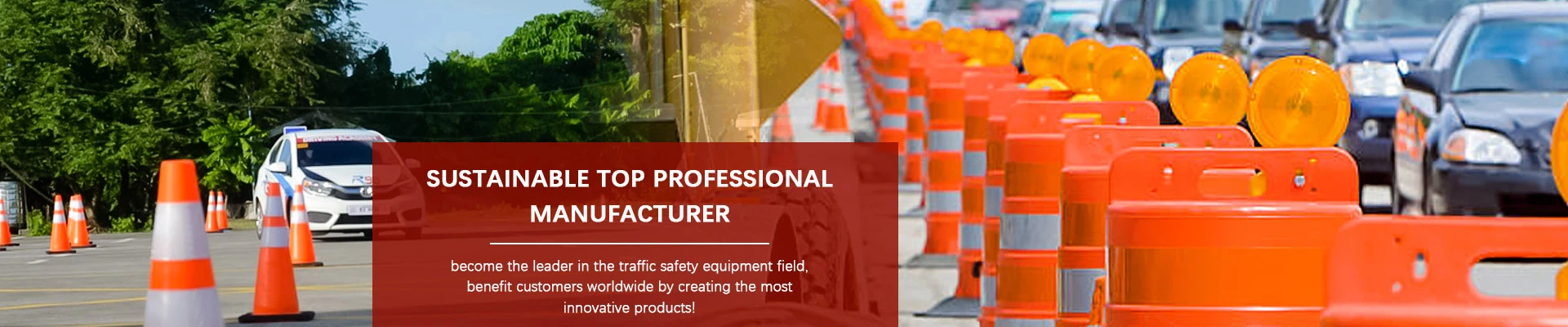

Among the many nighttime traffic-safety measures, seemingly modest items such as traffic cones and barricade lights often deliver disproportionately large safety returns, and multiple field evaluations and industry reports suggest that when cones are deployed according to best practice and combined with high-quality reflective bands and functioning flashing or steady barricade lights, nighttime crash rates or emergency braking events commonly fall by a meaningful margin-typically in the 20% to 40% range in many studies and practical deployments, although the precise effect depends on baseline visibility, vehicle speeds, traffic volumes, and installation quality.
The mechanism behind these numbers is straightforward: cones increase visual contrast through color, form and reflective material, shifting drivers' detection-to-reaction window earlier, and field checks consistently show that cones with standard reflective bands are identified at much greater distances at night-often doubling the detection range under certain lighting conditions-while adding barricade lights amplifies driver attention and depth perception so that lane shifts or taper starts are read more clearly; in practice, cone-and-light combinations reduce lane intrusion errors and abrupt evasive maneuvers that would otherwise cause collisions.

Turning that potential into dependable outcomes hinges on installation and upkeep: adjusting cone spacing to posted speeds and traffic flow, placing high-visibility flashing lights at the start and end of closures, choosing taller and heavier cones where wind or vehicle contact is likely, and scheduling routine night checks for reflective integrity and battery levels; experience shows that neglecting any of those details-worn reflective tape, dead batteries, or overly sparse cone spacing-can nullify most of the expected benefit, which is why many teams track simple quantitative metrics (e.g., percent of cones with intact reflectivity, nightly lamp functionality rate) to preserve performance.

In short, cones and barricade lights are not cosmetic-they extend sight distance, smooth traffic flow, and cue speed moderation and thus materially reduce risk at night; combining historical incident data from your sites with on-site observations typically yields an actionable set of specifications (cone height, reflective grade, lighting intensity and flash pattern, spacing curves by speed) that can convert that 20%–40% potential improvement into a reliable safety baseline. If you'd like, I can produce a tailored implementation worksheet with numeric recommendations for a given posted speed, typical weather, and traffic volume so you can go straight to procurement and nightly checklists.