

Yo, what's up everyone! As a speed bump supplier, I've always been super curious about the history of these little traffic - controlling wonders. So, let's take a deep dive into the story behind speed bumps.
The Early Days
Back in the day, traffic was a lot different than it is now. There were fewer cars, and the speeds were generally lower. But as cities started to grow and the number of vehicles on the road increased, the need for traffic control became more and more obvious.
The first concept of something like a speed bump can be traced back to the early 20th century. In the 1950s, some European cities started experimenting with raised sections on the road to slow down traffic. These early versions were often made of concrete or asphalt. They were simple, but they did the job. The idea was to create an obstacle that would force drivers to slow down.
The Evolution of Design
Over time, the design of speed bumps has changed a lot. In the beginning, they were just basic, rectangular - shaped raised areas on the road. But as technology advanced and more research was done on traffic safety, the designs became more sophisticated.
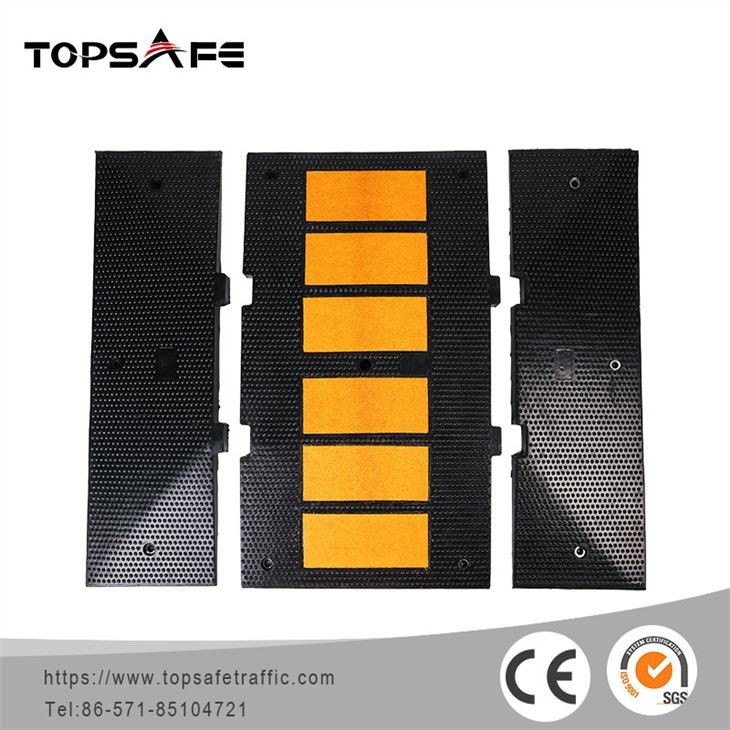
Now, we have speed bumps in all sorts of shapes and sizes. Some are rounded, which makes the ride a bit smoother for vehicles. Others are segmented, allowing for better drainage and easier installation. And the materials used have also evolved. We've moved from just concrete and asphalt to more modern materials like rubber.
Why Rubber Speed Bumps?
Rubber speed bumps have become really popular in recent years. And there are good reasons for that. First of all, they're much easier to install than concrete or asphalt speed bumps. You don't need heavy machinery to put them in place. They can be simply bolted down to the road surface.
Secondly, rubber speed bumps are more flexible. They can withstand a lot of wear and tear from vehicles driving over them. They're also less likely to crack or break compared to concrete ones. And they're more visible, especially at night, because they can be painted with reflective strips.
Our Products
As a speed bump supplier, we offer a wide range of high - quality speed bumps. Check out our High Strength Traffic Road Safety Rubber Speed Hump. This product is made of high - strength rubber, which can handle heavy traffic. It's designed to be durable and long - lasting.
We also have the Road Traffic Safety Rubber Speed Bump. This speed bump is perfect for roads where traffic needs to be controlled. It's easy to install and provides a smooth yet effective way to slow down vehicles.
And if you're looking for speed bumps for driveways, our Traffic Rubber Speed Humps For Driveways are a great choice. They're designed to be less intrusive while still being effective at reducing speed.
The Impact on Traffic Safety
Speed bumps have had a huge impact on traffic safety. By forcing drivers to slow down, they reduce the risk of accidents. In areas where speed bumps are installed, the number of collisions and injuries has been significantly reduced.

They also help to create a more pedestrian - friendly environment. When cars are moving at a slower speed, it's safer for people to cross the road. And in residential areas, speed bumps can make the neighborhood a lot quieter and more peaceful.
The Future of Speed Bumps
Looking ahead, I think we'll see even more innovation in the design of speed bumps. There might be speed bumps that can adjust their height depending on the time of day or the traffic volume. We could also see more integration of smart technology, like sensors that can detect the speed of approaching vehicles and adjust the speed bump accordingly.
Let's Connect
If you're interested in our speed bump products, we'd love to have a chat with you. Whether you're a city planner looking to improve traffic safety in your area, a property manager in charge of a parking lot, or just a homeowner wanting to make your driveway safer, we've got the right speed bump for you. Reach out to us, and let's start a conversation about how we can meet your needs.
References
- "Traffic Calming: State of the Practice" by the Institute of Transportation Engineers.
- "The History of Traffic Control Devices" from various historical transportation archives.