

Speed humps are a common sight on roads around the world, designed to slow down traffic and improve safety. However, a question that often arises is whether these traffic calming devices can actually damage vehicles. As a supplier of a wide range of speed humps, including Portable Temporary Plastic Road Speed Hump, Modular Vehicle Rubber Speed Hump with Yellow Anti - Slip Pads, and 72 inch Road Saftey Speed Bump, I will explore the science behind this question.
How Speed Humps Work
Speed humps are engineered to force drivers to reduce their speed. They are typically raised sections of the road surface with a specific height, width, and slope. The standard height of a speed hump ranges from 3 to 4 inches, and the width can vary from 12 to 22 feet. The slope of a speed hump is designed to be gradual enough so that a vehicle can cross it safely at a low speed but uncomfortable or potentially dangerous at a high speed.
When a vehicle approaches a speed hump, the suspension system of the vehicle has to adapt to the change in the road surface. At low speeds, the suspension can absorb the shock relatively smoothly. The springs in the suspension compress and then expand as the vehicle passes over the hump, allowing the wheels to maintain contact with the road and the vehicle to remain stable.
Potential Damage Mechanisms
Suspension System
One of the main concerns regarding speed humps and vehicle damage is the impact on the suspension system. If a vehicle hits a speed hump too fast, the rapid and excessive compression of the suspension springs can cause damage. Over time, repeated high - speed impacts can lead to worn - out shock absorbers, broken springs, or damaged bushings. Shock absorbers are designed to control the movement of the springs and dampen the vibrations, but excessive force can cause them to leak hydraulic fluid or lose their ability to function properly.
Tires and Wheels
Tires and wheels are also at risk. Hitting a speed hump at high speed can cause the tire to deform suddenly. This can lead to sidewall damage, such as cuts or bulges. Wheels may also be affected, as the sudden force can cause them to bend or crack. In extreme cases, hitting a speed hump too hard can even cause a tire blow - out, which is extremely dangerous for both the driver and other road users.
Exhaust System
The exhaust system of a vehicle is located underneath the car. When a vehicle hits a speed hump at a high speed or with improper clearance, the exhaust pipe can scrape against the hump. This can lead to dents, cracks, or even a complete detachment of the exhaust system. A damaged exhaust system can affect the vehicle's performance and increase emissions.
Underbody Components
Other underbody components, such as the oil pan, transmission, and fuel tank, can also be damaged. If the vehicle's ground clearance is low and the driver does not slow down properly, these components can come into contact with the speed hump, causing punctures, leaks, or other types of damage.
Factors Influencing Damage
Vehicle Design
The design of the vehicle plays a crucial role in determining whether it will be damaged by speed humps. Vehicles with a high ground clearance, such as SUVs and trucks, are generally more resistant to speed - hump - related damage. They have a greater distance between the underbody and the road surface, reducing the risk of scraping or hitting the hump.
On the other hand, low - profile sports cars and sedans with a low ground clearance are more vulnerable. The suspension systems of these vehicles are often tuned for high - speed performance rather than for dealing with rough road conditions like speed humps.
Speed of the Vehicle
The speed at which a vehicle approaches a speed hump is a significant factor. As mentioned earlier, driving over a speed hump at a low speed (usually recommended to be around 5 - 15 mph) allows the suspension to absorb the shock gradually. However, if a driver approaches a speed hump at a high speed, the forces exerted on the vehicle can be several times greater, increasing the likelihood of damage.
Quality of the Speed Hump
The quality and design of the speed hump itself also matter. Well - designed speed humps with a smooth slope and proper height and width are less likely to cause damage. Our Portable Temporary Plastic Road Speed Hump, for example, is designed with a gradual slope to minimize the shock to the vehicle. In contrast, poorly constructed speed humps with sharp edges or uneven surfaces can cause more damage to vehicles.
Mitigating the Risk of Damage
Driver Education
One of the most effective ways to reduce the risk of vehicle damage from speed humps is driver education. Drivers should be aware of the presence of speed humps and the importance of slowing down. Many traffic authorities post signs indicating the presence of speed humps in advance, giving drivers time to adjust their speed.
Proper Speed Hump Installation
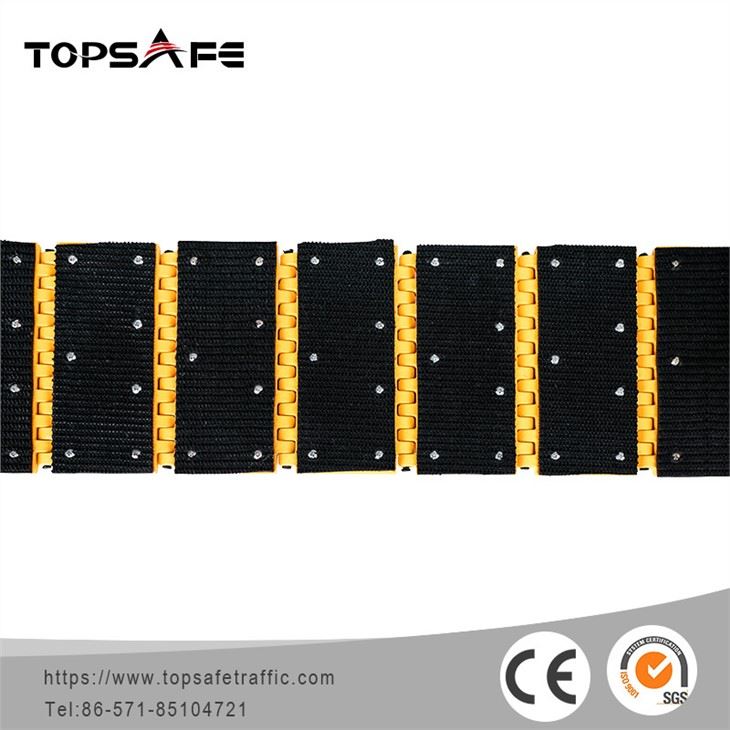
Proper installation of speed humps is essential. They should be installed at the correct height, width, and slope, and the surface should be smooth and even. Our company provides detailed installation instructions for all our speed humps, including the Modular Vehicle Rubber Speed Hump with Yellow Anti - Slip Pads, to ensure that they are installed correctly and safely.

Regular Vehicle Maintenance
Regular vehicle maintenance can also help detect and prevent speed - hump - related damage. Mechanics can check the suspension system, tires, wheels, exhaust system, and underbody components during routine inspections. Early detection of any damage can prevent further deterioration and costly repairs.
Conclusion
In conclusion, speed humps can potentially damage vehicles if they are not approached correctly. However, when used properly and in conjunction with driver education and proper vehicle maintenance, the risk of damage can be significantly reduced. As a speed hump supplier, we are committed to providing high - quality products that are designed to slow down traffic safely without causing excessive damage to vehicles. Our 72 inch Road Saftey Speed Bump and other products are engineered to meet the highest standards of safety and durability.
If you are interested in purchasing speed humps for your road safety needs, we invite you to contact us for a detailed discussion. We can provide you with more information about our products, installation services, and pricing. Let's work together to create safer roads for everyone.
References
- "Traffic Calming: State of the Practice" by the Institute of Transportation Engineers.
- "Vehicle Dynamics: Theory and Application" by Rajesh Rajamani.
- Research papers on road safety and traffic calming devices from academic journals such as the Journal of Transportation Engineering.