

Hey there! As a supplier of delineators bollard, I often get asked a bunch of questions about where and how these things can be installed. One question that pops up quite a bit is, "Can delineators bollard be installed on uneven surfaces?" Well, let's dive right into it and find out.
First off, let me give you a quick rundown on what delineators bollards are. They're those sturdy posts you see around parking lots, construction sites, and roads. Their main job is to mark boundaries, guide traffic, and protect areas from accidental collisions. They come in all sorts of shapes, sizes, and materials, like plastic, rubber, and metal.
Now, back to the big question: uneven surfaces. The short answer is, it depends. There are a few factors we need to consider before we can say yes or no.
Surface Type
The type of uneven surface matters a whole lot. Is it a bumpy gravel road, a cracked concrete sidewalk, or a grassy field with dips and mounds? Each surface presents its own set of challenges.
For instance, on a gravel road, the bollards might not get a solid grip. Gravel is loose, so the bollard could easily shift or topple over. But if we use a bollard with a heavy base or a proper anchoring system, we might be able to make it work.
On a cracked concrete surface, the situation is a bit different. The cracks can weaken the foundation for the bollard. If the bollard is not installed correctly, it could end up wobbly or even break off. However, we can use epoxy or other strong adhesives to secure the bollard in place.
Grassy fields are another story. The ground is soft and can be easily compressed. Bollards with a wide base or those that can be deeply inserted into the ground are better suited for this type of surface.
Bollard Type
Not all bollards are created equal. Some are designed to be more flexible and adaptable to uneven surfaces.
Reflective Dock Parking Bollard are a great option for uneven surfaces. They're usually made of flexible materials like rubber or plastic. This flexibility allows them to bend and adjust to the bumps and dips without breaking. They also have reflective strips, which make them highly visible, even in low - light conditions.

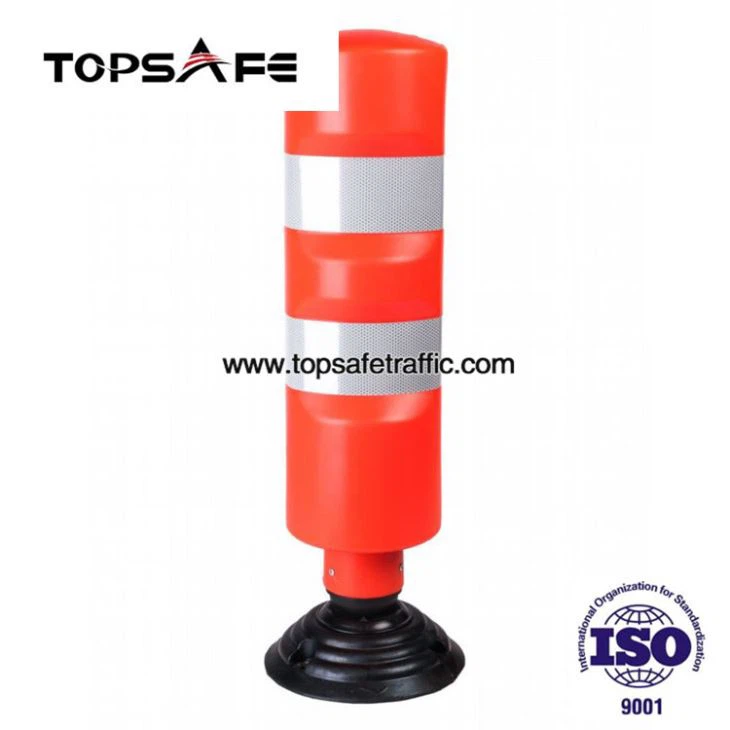
Traffic Fleixble Delineators Bollard are another good choice. These bollards are designed to withstand impacts and can be easily installed on various surfaces. They're often used in areas with high traffic, such as parking lots and roads.
The T - Top PVC Bollard With 8kgs Rubber Base is also worth considering. The heavy rubber base provides stability, which is crucial on uneven surfaces. The PVC material is durable and can resist weathering and damage.
Installation Method
The way we install the bollards is just as important as the type of bollard and the surface.
For uneven surfaces, we might need to use special installation techniques. For example, if the surface is too bumpy, we can level a small area around the installation point. This can be done by filling in the low spots with gravel or concrete.
Another option is to use adjustable bases. These bases can be adjusted to fit the contour of the uneven surface. They allow the bollard to stand upright and stable.
Advantages of Installing on Uneven Surfaces
You might be wondering why anyone would want to install bollards on uneven surfaces in the first place. Well, there are actually a few good reasons.
First, it can help protect areas that are difficult to access or have irregular terrain. For example, in a construction site with a lot of debris and uneven ground, bollards can mark off dangerous areas and prevent accidents.
Second, it can improve traffic flow. Even on uneven roads or parking lots, bollards can guide vehicles and pedestrians, making the area safer and more organized.
Challenges and Solutions
Of course, installing bollards on uneven surfaces isn't without its challenges. One of the biggest challenges is ensuring stability. As I mentioned earlier, uneven surfaces can make it difficult for the bollards to stand upright.
To solve this problem, we can use heavier bases or more secure anchoring systems. For example, we can use concrete footings or ground screws to keep the bollards in place.
Another challenge is maintenance. Uneven surfaces can cause wear and tear on the bollards more quickly. We need to regularly check the bollards for damage and make repairs as needed.
Conclusion
So, can delineators bollard be installed on uneven surfaces? The answer is yes, but it requires careful consideration of the surface type, bollard type, and installation method. With the right approach, we can install bollards on uneven surfaces to improve safety and organization.
If you're interested in purchasing delineators bollards for your project, whether it's for an uneven surface or not, feel free to reach out. We have a wide range of high - quality bollards to meet your needs. Let's have a chat about your requirements and find the perfect solution for you.
References
- Traffic Safety Manuals
- Industry Reports on Bollard Installation
- Manufacturer's Guides for Bollard Products